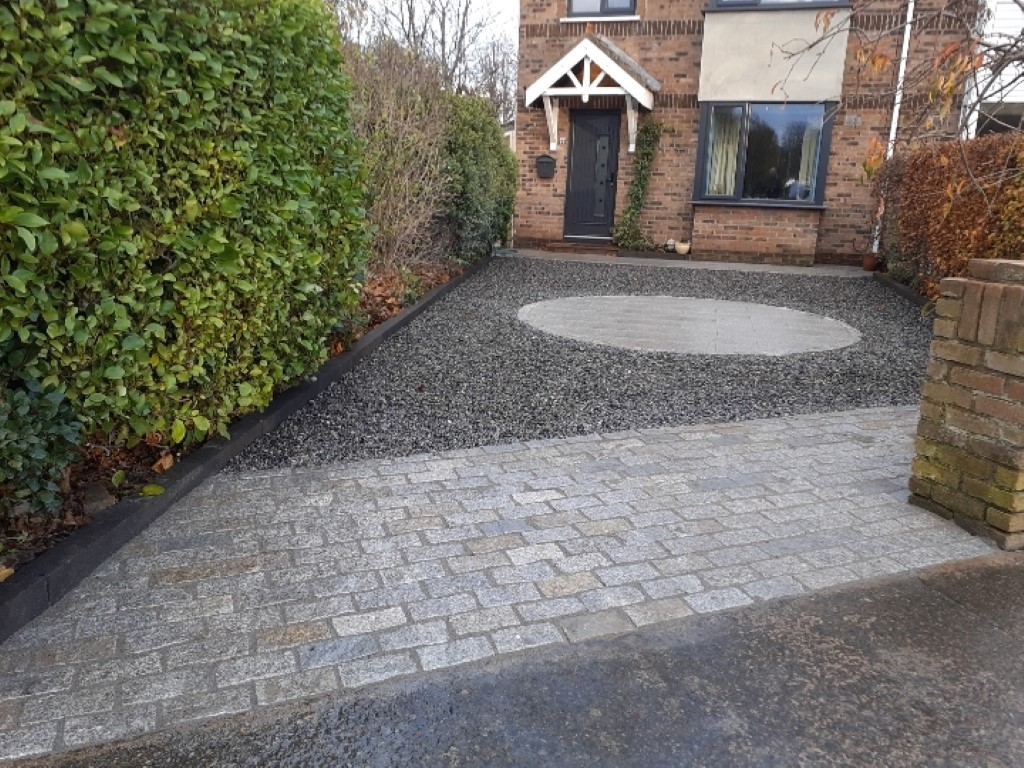
Proper edging prevents gravel from spreading onto lawns, flowerbeds, and neighbouring properties. Without adequate containment, your driveway gravel will migrate and create maintenance headaches.
Clay soil expands and contracts with seasonal moisture changes. This movement can shift poorly installed edging, making material choice and professional installation expertise crucial for long term performance.
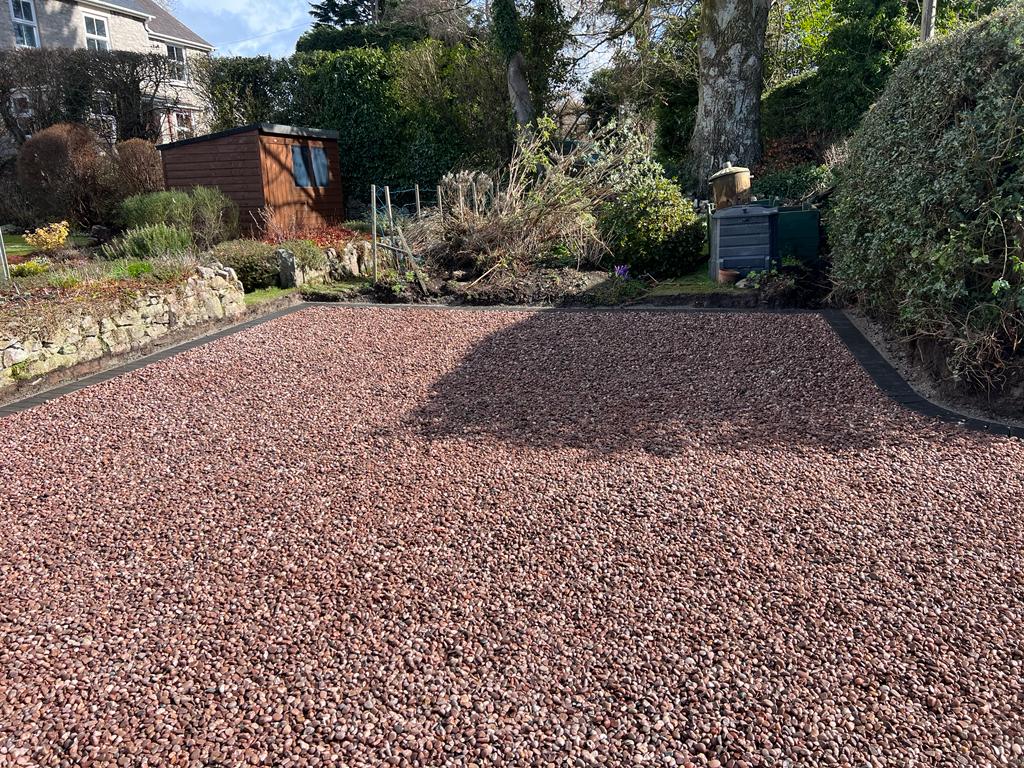
Concrete Kerb Edging
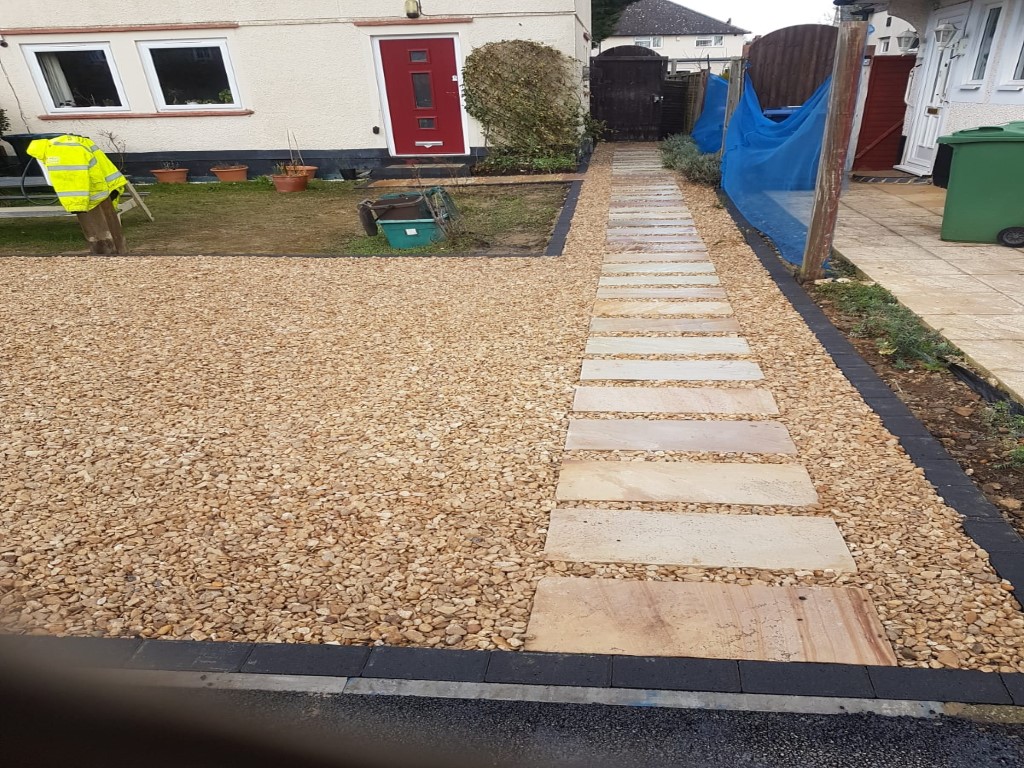
Concrete kerbs provide the strongest containment for heavy traffic driveways. Install them 100mm deep into excavated foundations with concrete haunching for stability.
- Excellent durability in Bournemouth’s wet winters
- Handles vehicle weight without shifting
- More expensive than other options
- Requires skilled installation
Timber Edging Solutions
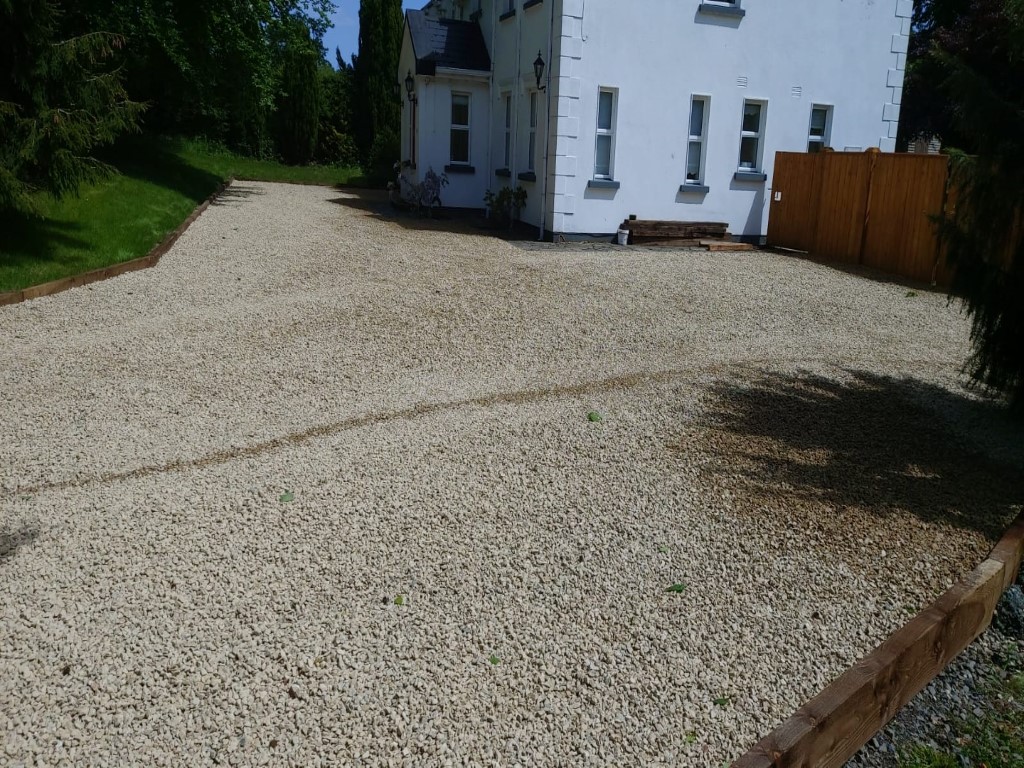
Pressure treated timber offers a natural appearance that suits Bournemouth’s leafy residential areas. Use 32mm thick boards minimum, secured with 450mm stakes every metre.
Hardwood sleepers create substantial edging for wider driveways. Railway sleepers work well but check they are not treated with harmful chemicals if sourcing secondhand.
Metal Edging Systems
Steel or aluminium strips provide clean lines and easy installation. Choose galvanised or powder coated finishes to resist corrosion from Bournemouth’s coastal moisture.
Flexible metal edging adapts to curved driveway designs. Install with ground spikes every 600mm, ensuring the top edge sits 25mm above gravel level.
Stone and Brick Borders
Natural stone edging complements period properties common in Bournemouth’s conservation areas. Set stones in concrete for permanent installation or dry lay for easier adjustments.
Engineering bricks create formal edging that matches Victorian and Edwardian architecture. Lay on concrete foundations with mortar joints for maximum stability.